


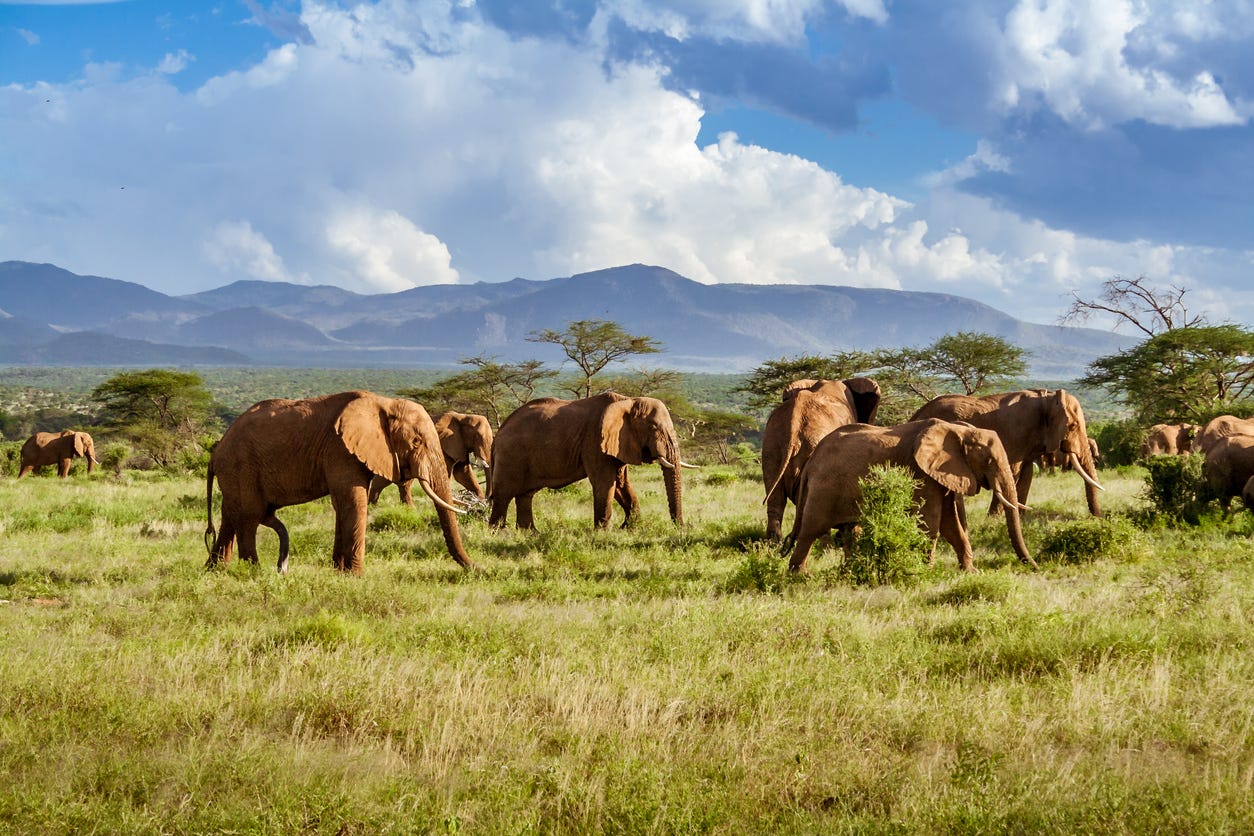
“When an elephant claims the right of way, give it to him.” That was my advice to my nervous stepfather, who was behind the wheel as we wound our way northward through South Africa’s magnificent wildlife-filled Kruger Park. In the road was a young bull elephant coming toward us—and he showed no sign of stopping to let us pass.
I told my stepdad to throw it into reverse and back up slowly… just a little bit faster than the elephant. Sure enough, eventually the pachyderm got bored and wandered off into the bush.
Many foreigners associate South Africa with adventures like these. But as extraordinary as these wildlife encounters are, they’re just part of what South Africa has to offer. There’s also world-class wine… mountains and valleys indistinguishable from the South of France… flavorsome cuisines … and some of the world’s best surf spots.
Why I Made South Africa My Home
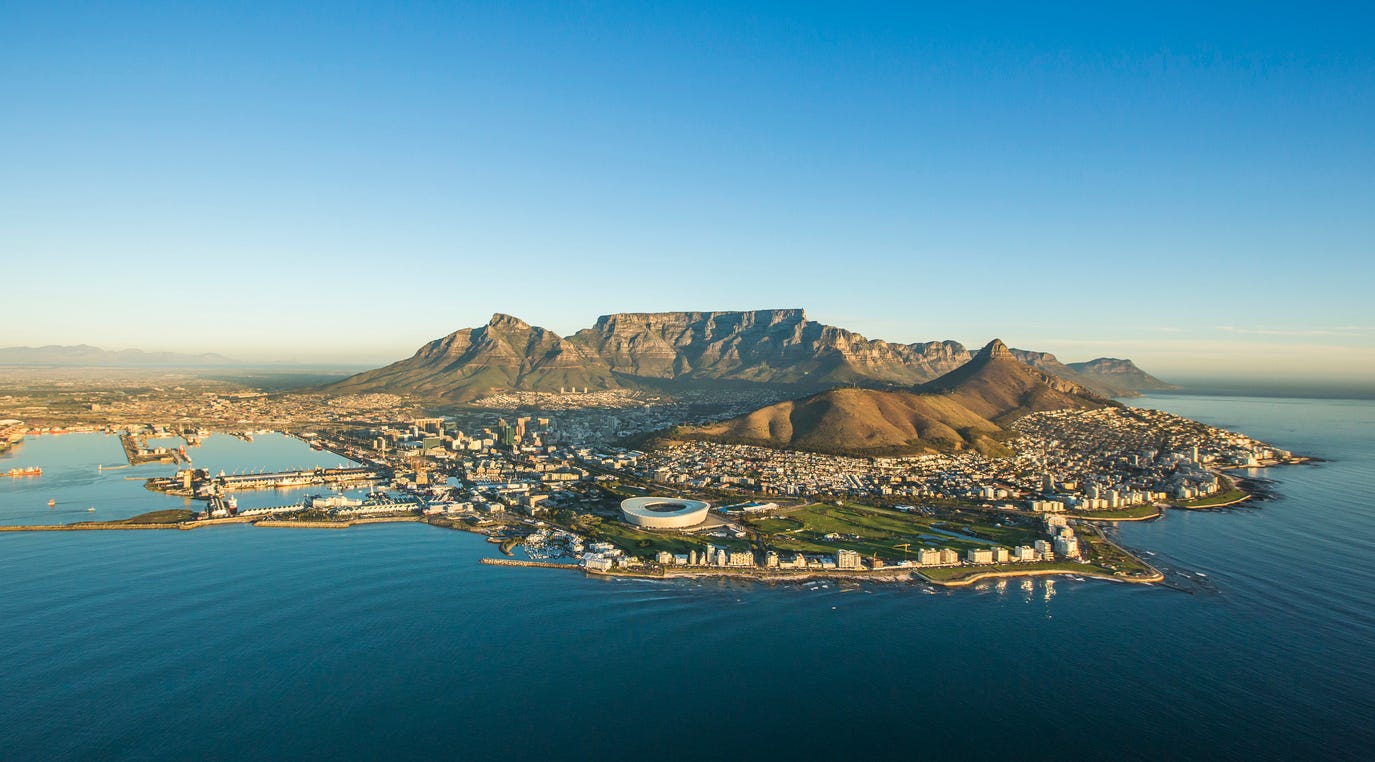
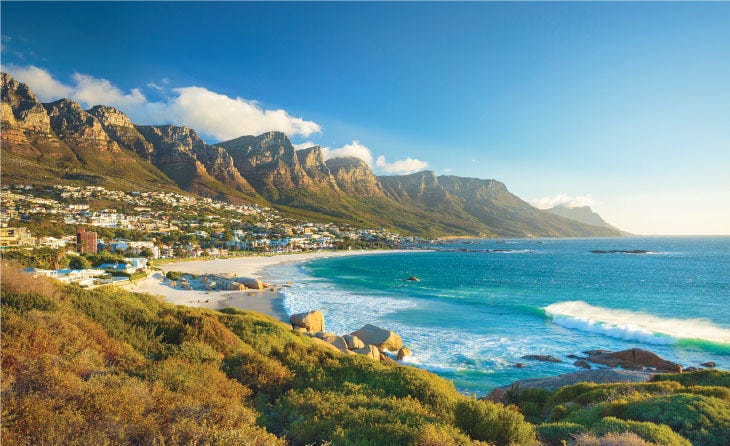
My family and I live in a 175-year-old farm cottage in a village called Muizenberg, built of stone quarried from the Table Mountain chain which looms above it. Muizenberg is part of greater Cape Town and famous for its beach, the most popular surfing spot in the region. It has the sort of hippie, bohemian vibe you’d associate with California’s Venice Beach.
I came to South Africa as a 20-year-old American looking for adventure and fell in love with the place at once. I’ve been living here for over 40 years, married a local, and became a citizen.
South Africans are a rambunctious but honest bunch, and some of the friendliest and most hospitable people on the planet.
There are still plenty of poor people in South Africa, but fortunately, the cost of living is much lower than in many other places, including the US. Staples like bread, rice, milk and eggs are half to one quarter of the price you’d pay in a major US city. A meal at a decent restaurant will cost you about 20% of what you’d pay in the US. Mobile phone and Internet costs are about 1/3 of the US. Whether renting or buying, Apartments and homes go for about 85% less than they do in the US.
Of course, this is hardly a perfect country. It’s one of the world’s most unequal societies. The national government and most provincial governments are corrupt and inefficient. (The Western Cape, where Cape Town is, is a well-run outlier.) But none of this prevents South Africa from being a premier tourist destination.
South Africa is also an attractive destination for “snowbirds,” people who buy homes here and come down for the southern hemispheric summer between November and April. And we’re likely to see more foreign residents: the government has just announced its intention to create a digital nomad visa, as well as a long-term independent means/retirement residency permit.
Just the other day, I ran into a young American couple in one of the delightful stone tidal pools that dot the coast of False Bay between Muizenberg and Kalk Bay, a fishing village with a serious old-time feel a few miles to the South.
That’s because there are now 21 weekly flights from the US to South Africa, both to Johannesburg and direct to Cape Town. The total flight time from Atlanta to Cape Town is about 18 hours and 30 minutes—admittedly a lot. But I’ve done it dozens of times, and it’s not as bad as it sounds. Every time I take it, I just focus on what’s going to be at the end of that journey.
A True Wild Kingdom
As a kid growing up on Maryland’s Eastern Shore, I watched a show called Mutual of Omaha’s Wild Kingdom. I was too young to know that the more adventurous scenes were staged, but it left an indelible mark.
Many scenes in Wild Kingdom were filmed in South Africa’s Kruger Park, the oldest and largest in the country. Created by the South African Republic in 1898 to preserve hunting game, it was proclaimed a national park in 1926. Today, it’s part of the largest transnational conservation area on the planet, where border fences between South Africa and Zimbabwe have been removed to allow animals to migrate as nature intended.
Depending on the time of year, in Kruger you’ll meet vast herds of Cape buffalo, wildebeest, springbok and other gazelles, zebras, giraffes, baboons, hippos, rhinos—and of course, lions and cheetahs. If you’re going out on a night safari, you might even spot a leopard.
That’s not to mention the duiker, the world’s smallest antelope, long-tailed monkeys, porcupines, African wild dogs, jackals, hyenas, and all the rest of the wildlife that lives under the bush canopy. And of course, the birds and vegetation, including the majestic baobab.
But Kruger is only one of the country’s nature reserves. There are over 1,500 protected areas on both state and private land. In the last few decades, conservation and tourism have combined to encourage investors to buy up large tracts of marginal farmland to convert into nature reserves in parts of the country that lost most of their wildlife centuries ago.
These days, you can go on safari within two hours’ drive of Cape Town, where I live. For example, last year my family and I went to Aquila Private Game Reserve north of the city. We enjoyed spectacular game drives, meeting hippos, rhinos, elephants, lions, giraffes, and all manner of gazelles. And in the evenings, we were delighted by the sounds of African bullfrogs croaking in the pond directly in front of our thatched hut.
A Taste of French Wine Country
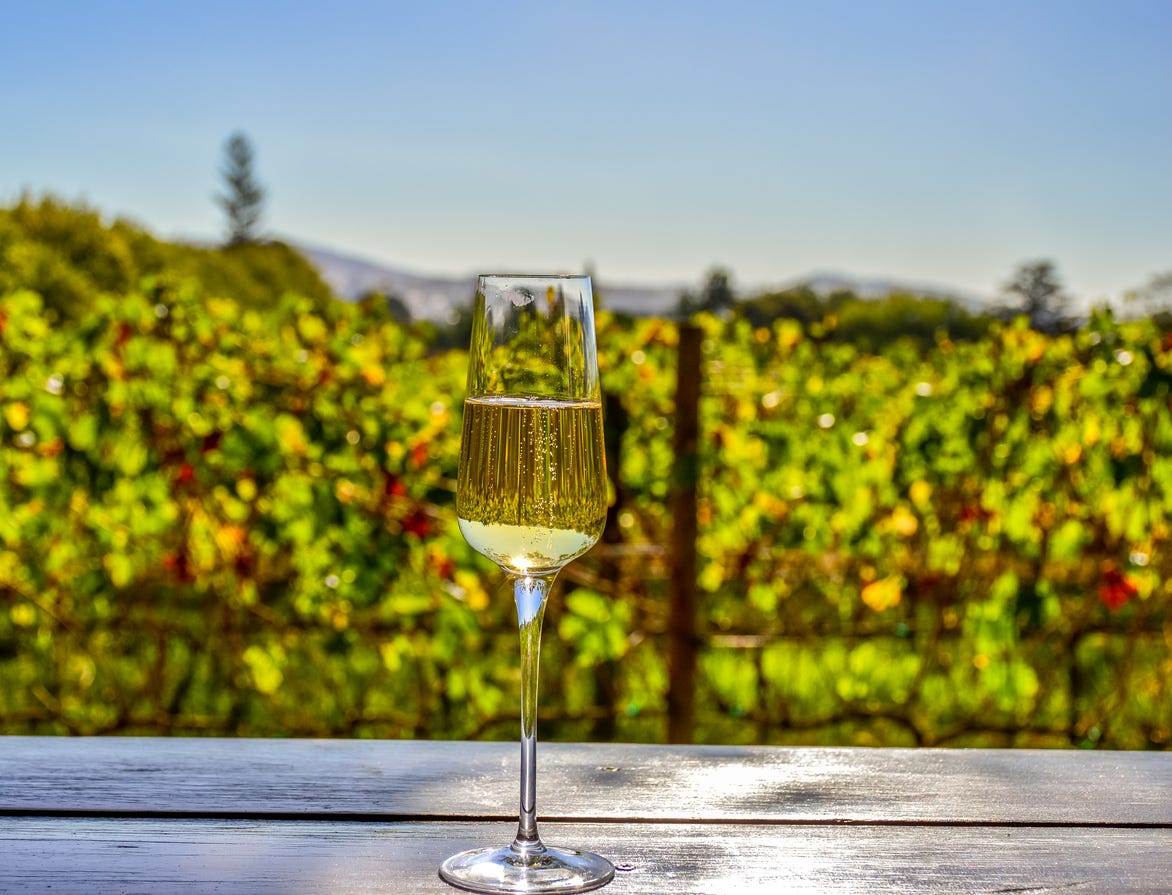
Many tourists—especially those from Europe on return visits—come to South Africa primarily for the Western Cape. In addition to the dozens of dorpies (small towns) dotting the valleys between mountain ranges, there’s also the Mediterranean climate, warm and dry during the summer.
And then there’s the wine.
The southwestern Cape region is home to one of the world’s most productive viticultures. The Dutch East India Company founded the settlement at Kaapstad (Cape Town) to create a supply base for ships plying the route between northwestern Europe and the Far East. It quickly became a favorite destination of retired employees of the Dutch East India company, who were encouraged to settle and produce crops for the shipping trade. Some chose to focus on grapes for wine, setting up vineyards to the east of Cape Town, around Stellenbosch and Paarl.
Thirty-five years after the Dutch planted their flag, another group of European wine lovers landed: Huguenots fleeing religious persecution in France.
The Huguenots founded a small town called Franschhoek (”French corner”) nearby. Today it’s home to some of the highest quality vineyards in the country—bearing names like La Motte, La Cotte, Haute Cabrière, Grand Provence, Chamonix, and Dieu Donné. Most of them still have their original farmhouses and outbuildings built from the 17th and 18th centuries. Foreigners who discover this little transplanted piece of France at the bottom of Africa never forget it.
The wine is one reason. But Franschhoek’s culinary and artistic attractions deserve equal weight. The village is dotted with world-class restaurants, such as La Petite Colombe, Orangerie, Le Quartier Français and Haute Cabrière. It’s also home to many art galleries, like Grande Provence and Everard Read. Not for nothing did Time Magazine declare the town “One of The World’s Great Places” in 2022.
A Nation in Love With Food
South Africa is a remarkably diverse country, with influences ranging from 17th-century European settlers to Malaysian and Indian immigrants and, of course, indigenous African cultures.
The country has 11 official languages, reflecting not only the Dutch and British settlers, but also nine distinct ethnic groups who make their home here.
Although they may not be as outwardly fancy as Franschhoek, within township neighborhoods you’ll find world-class restaurants specializing in African dishes, such as masonja (caterpillars) in tomato sauce, umngqusho (cracked corn and beans), and peanut and chili-infused greens.
And of course, everywhere you go you’ll be presented with shisanyama, which translates as “burnt meat.” Indeed, cooking various meats over an open fire is South Africa’s national passion, shared equally by all (except Hindu vegetarians!). Known universally as braaivleis, it’s so important to our culture that it even has its own national day, made popular by its founding patron, Archbishop Desmond Tutu.
How to Spend Two Weeks in South Africa
South Africa is at a crossroads. The post-apartheid political culture has run its course, and a younger generation wants to foster growing and more equitable economy. So does most of the older generation… That’s why I’m so bullish on the country: It’s on the cusp of a big leap forward.
Is South Africa Safe to Visit?
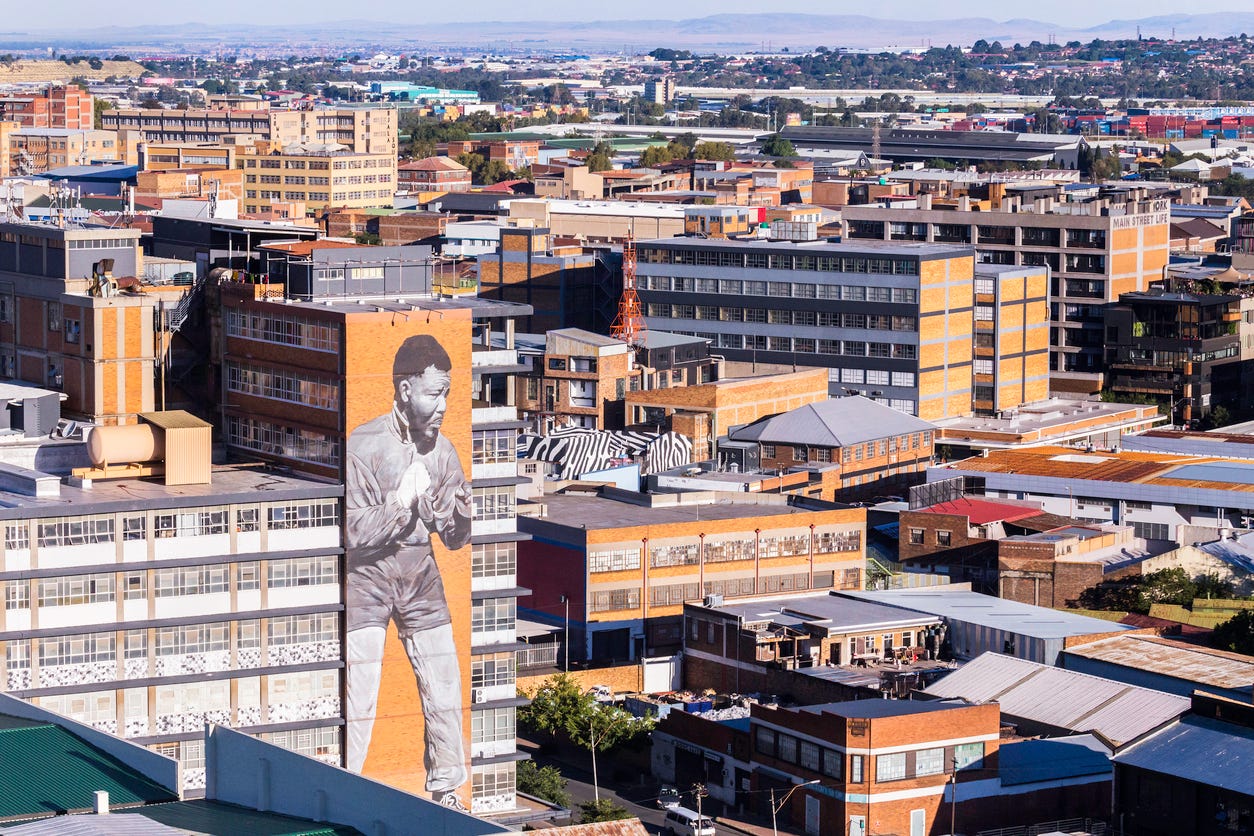
No travel article about South Africa would be complete without some mention of safety.
I’ve been living in South Africa for the better part of four decades. I have never experienced any physical crime, although I have suffered a few break-ins, both to vehicles and on one occasion to my home.
The Institute for Economics and Peace’s Global Peace Index for 2025 ranked South Africa four spots ahead of the United States in terms of safety and security.
That’s the lesson here: Overall statistics paint an entire country with a single brush. Just as millions of Americans go about their daily lives without meeting personal safety issues, so do most South Africans.
Having lived in a major American city with a high crime rate—Atlanta—I know how Americans manage crime in their environment. They stay informed, consider how likely they are to become a victim, and avoid contexts in which they are likely to do so. But most people keep a balanced view, and don’t succumb to unwarranted paranoia. The same applies to South Africa.
— Ted Baumann, IL’s Global Diversification Expert
Ready to take your next step overseas?
If you’re thinking about moving or investing abroad, Ted Baumann, International Living’s Chief Global Diversification Expert, can help you build a custom plan for protecting assets, exploring second passports, lowering taxes, and structuring overseas property .
👉 Book a one-on-one consultation with Ted here to map out your international strategy.